The 5 Best Hardware Synths for Techno: Our Studio Picks
From percussive grooves on the Moog DFAM to fat Model D basslines and lush minilogue pads: the five hardware synths we recommend for techno, straight from our studio, with the video walkthrough.
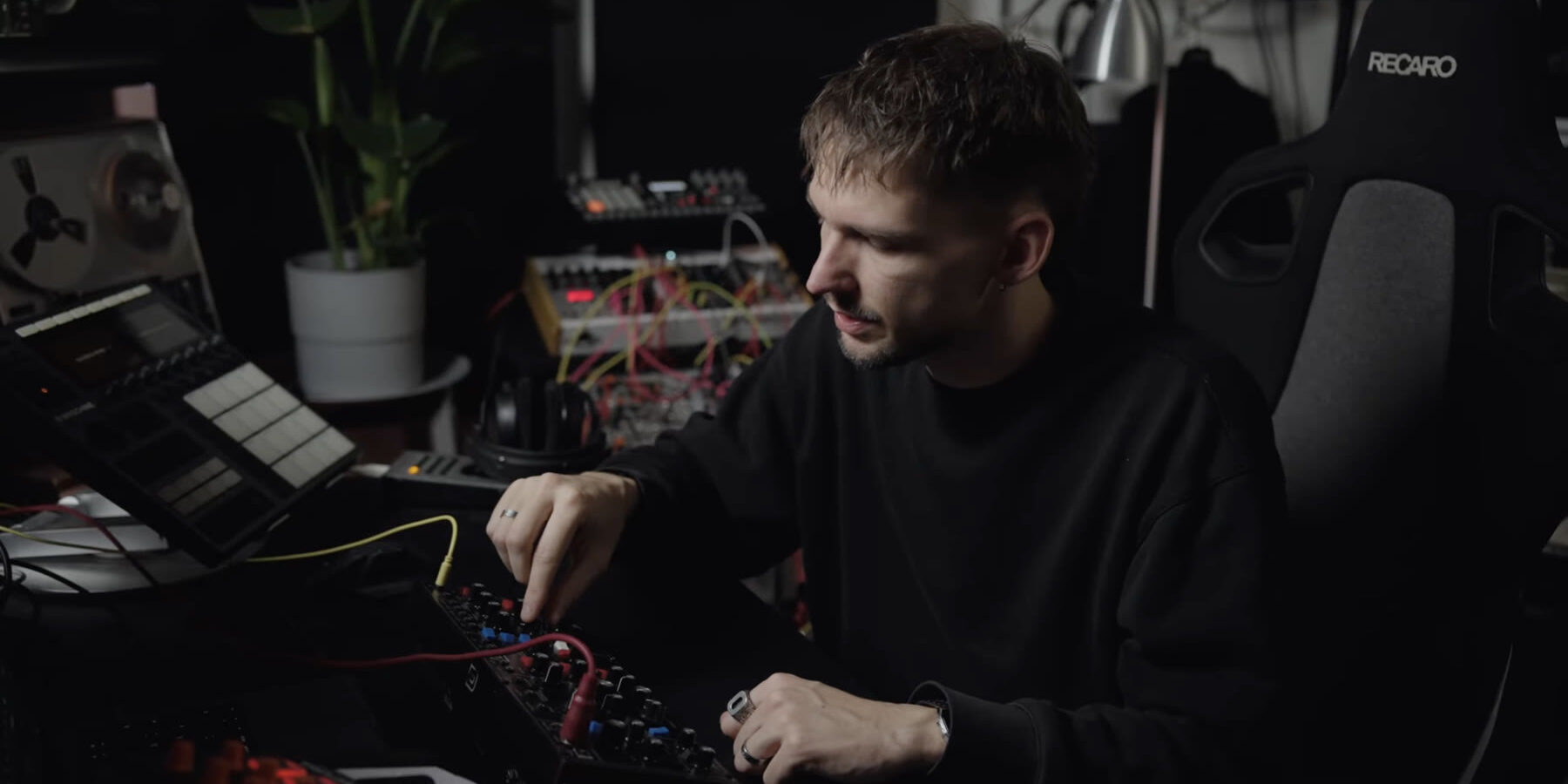
A great techno track does not need a wall of gear. It needs a few instruments you know inside out. Our founder Roman Farov has owned and sold a lot of hardware over the years, and today most of his sound comes from a modular system. These are the five synths that made the cut, the ones he still recommends to every techno producer who asks.
Want to hear and see them first? Watch the full walkthrough from our studio:
Plays from YouTube (Google) after you click. Watch on YouTube
Our top 5 at a glance
- Moog DFAM or Behringer Edge: percussion, low end grooves and creative sequences
- Minimoog Model D or Behringer Model D: the best first synth for techno bass
- Korg MS-20 or Behringer K2: wild, patchable and very creative
- Korg minilogue or Novation Peak: polyphonic pads, chords and atmospheres
- Moog Labyrinth: generative sequences, next on our wish list
Original or clone?
You will notice that most picks come in pairs: the original and the Behringer clone. Some producers do not like clones, and that is fair. But in our experience they sound very close to the originals at a fraction of the price. Our approach: get the affordable version first, learn if the instrument really fits your workflow, and upgrade later if you fall in love with it.
1. Moog DFAM or Behringer Edge: grooves from the low end
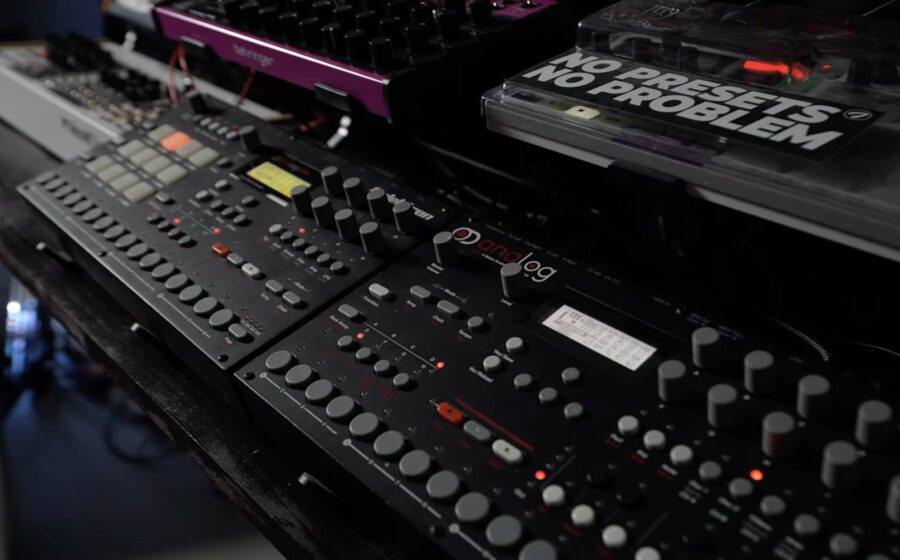
The DFAM (Drummer From Another Mother) is a semi-modular analog percussion synth, and it is the one piece of hardware Roman kept after moving to modular. He uses the Behringer Edge, the DFAM clone, and after testing both side by side the difference is tiny. You might hear it on extreme filter envelope settings, but in a track they sound the same.
The Edge also adds one big improvement: MIDI input. The original DFAM has none, so syncing it with Ableton Live and the rest of your gear needs an extra MIDI to CV converter. With the Edge you just plug it in.
Why it works for techno: the 8 step sequencer and the patch bay give you percussive, rolling grooves and low end patterns that never sound like a standard drum machine. Patch the sequencer into different destinations and you get creative, evolving sequences in minutes.
Best for: percussion, low end grooves, creative sequences.
2. Minimoog Model D or Behringer Model D: the best first synth
If you are just starting out, this is the synth we would buy first. The Model D is a fully analog mono synth with three oscillators, the famous Moog ladder filter, envelopes, a noise source and simple modulation. That clear, classic layout makes it very beginner friendly: once you understand the Model D, you understand how almost every subtractive synth works.
For techno it delivers a huge, solid low end and great bass sequences with very little effort. Roman had the Behringer Model D in his modular case for a long time and says he might buy one again. Today he mostly uses software versions like Native Instruments Monark or the Mini V in Arturia’s V Collection, but the hardware simply sounds better.
Best for: basslines, sub bass, learning synthesis.
3. Korg MS-20 or Behringer K2: wild and creative
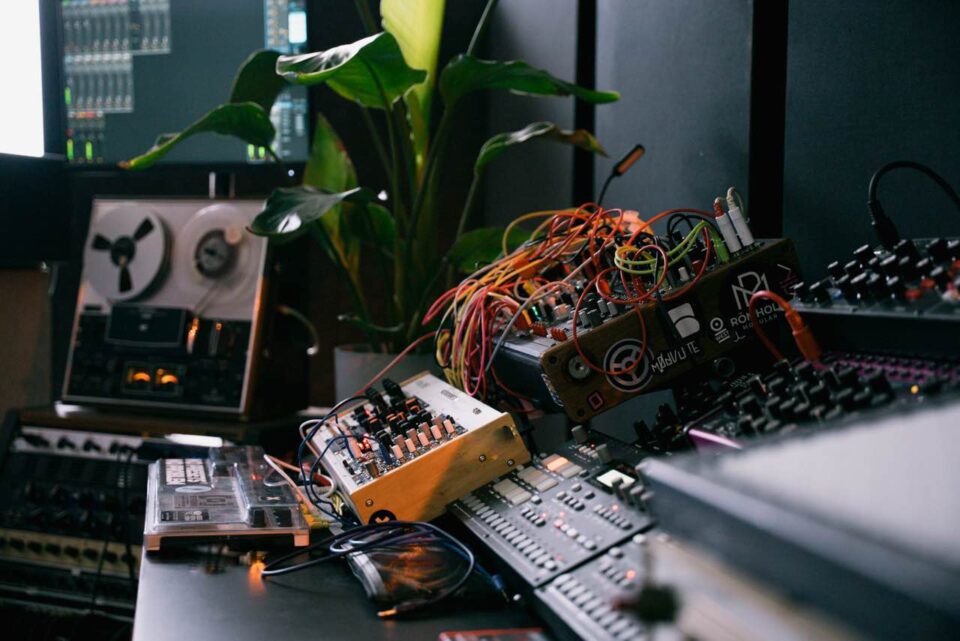
The MS-20 is a semi-modular analog classic with an aggressive filter and a patch panel that invites experiments. You can build synth lines, percussion and noisy textures, even an entire album, from this one instrument.
The catch: it is not beginner friendly. When Roman got his MS-20 right after the Model D, it took a while before he got a sound out of it. You need to spend time learning the signal flow, and switching between very different sounds means repatching and retweaking every time. That is why we recommend the Model D first.
The Behringer K2 is the affordable clone and sounds very close. The original might be a touch warmer, which is no surprise for an instrument designed decades ago.
Best for: experimental synth lines, percussion, aggressive filter sounds.
4. Korg minilogue or Novation Peak: pads, chords and atmospheres
The first three synths on this list are mono synths. They play one note at a time, which is perfect for bass and sequences but leaves a gap: pads, chords and atmospheres. That is where a polyphonic synth comes in.
The Korg minilogue (and the minilogue xd) is the affordable pick with analog voices, a built-in sequencer and enough depth for lush textures. The Novation Peak costs about twice as much, but it can do almost everything: rich pads, textures, basses and mid range synth lines, with extra sound design options that go deeper than the mono synths above.
Best for: dub techno chords, pads, drones and atmospheres.
5. Moog Labyrinth: generative sequences (on our wish list)
To be transparent: the Labyrinth is the one synth on this list we have not used in the studio yet. It is the synth Roman wants to add next, based on what he has seen so far.
What makes it exciting for techno are its two sequencers running against each other. That creates polyrhythmic, constantly shifting patterns and modulations, exactly the kind of hypnotic movement techno lives on. We will report back once it is on the desk.
Best for: generative sequences, polyrhythms, hypnotic patterns.
Quick comparison
| Synth | Type | Best for | Beginner friendly |
|---|---|---|---|
| Moog DFAM / Behringer Edge | Analog semi-modular percussion | Grooves, low end, sequences | Medium |
| Minimoog / Behringer Model D | Analog mono, 3 oscillators | Bass, first synth | Yes |
| Korg MS-20 / Behringer K2 | Analog semi-modular mono | Experimental sounds | No |
| Korg minilogue / Novation Peak | Polyphonic | Pads, chords, textures | Yes |
| Moog Labyrinth | Analog generative | Polyrhythmic sequences | Medium |
Prefer software? Start with VST synths
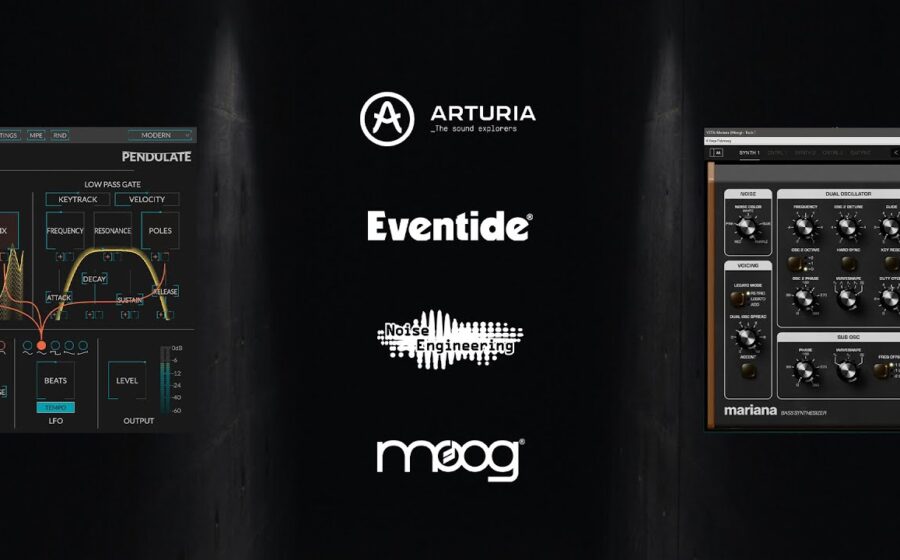
Hardware takes budget and space. If you want to start in the box, read our guide to the 5 best VST synths for techno. Three of them are free.
Or start with samples from real gear
If you want the sound of analog hardware in your tracks right now, our Analog Techno Sample Pack Vol. 1 gives you 297 loops and one-shots recorded from real analog synths and drum machines. Want to turn them into a finished mix? Check out our Techno Mixing Basics masterclass.
FAQ
What is the best first synth for techno?
We recommend a Model D, either the original Minimoog or the Behringer version. It is simple to learn, sounds huge in the low end and teaches you the basics of almost every synth.
Are Behringer clones good for techno?
In our experience, yes. The Edge, Model D and K2 sound very close to the originals for a fraction of the price. They are a smart way to find out which instruments you really love.
Do I need a polyphonic synth for techno?
Not for bass, percussion and sequences. A poly synth like the minilogue or Peak becomes important when you want chords, pads and atmospheres.